
Heartleaf Skincare Guide: Why Houttuynia Cordata Is K-Beauty's Calming Ingredient of 2026
Disclosure: This article contains Amazon Associate links. If you purchase through them, GlowSeoul may earn a commission at no extra cost to you.
Heartleaf skincare centers on Houttuynia cordata extract—a Korean botanical (eoseongcho) used to calm redness, support the barrier, and soothe reactive skin without harsh stripping. In 2026, Anua's viral Heartleaf 77% Soothing Toner helped shift U.S. routines toward barrier-first calming, backed by peer-reviewed anti-inflammatory research in skin models. Below: what heartleaf does, how it compares to centella, and three validated Amazon products to build a minimal routine.
What Is Heartleaf in Skincare—and Why Is It Trending in K-Beauty?
Heartleaf is the common name for Houttuynia cordata, a flowering plant native to Southeast Asia whose leaves and stems are extracted for skincare. Unlike water-diluted "botanical splash" formulas, leading K-Beauty heartleaf products concentrate the extract—often 77% to 80%—as the primary base ingredient rather than a trace add-on (Anua US, 2026).
The U.S. buzz reflects a wider format shift. Vogue's 2026 K-Beauty outlook notes rising demand for education on toner formats and gentle, treatment-inspired actives as shoppers move away from aggressive routines toward barrier-friendly botanicals (Vogue, March 2026). The Glowpick frames heartleaf as a 2025–2026 staple for sensitive and acne-prone skin, citing quercetin and quercitrin flavonoids as key actives (The Glowpick, February 2026).
Korean skin experts quoted by Grazia USA describe 2026 K-Beauty as prioritizing barrier recovery and calming botanicals—including cica and postbiotics—to build tolerance for stronger actives, rather than stripping skin in pursuit of "clear" results (Grazia USA, January 2026). Cosmetics Business notes that "heartleaf" became one of the fastest-growing U.S. ingredient search terms, driven largely by Anua's Heartleaf 77 Soothing Toner going viral on TikTok and Amazon (Cosmetics Business, November 2025). Heartleaf fits that shift: soothing today, stronger actives tomorrow.
What Does the Science Say About Houttuynia Cordata?
Heartleaf research is promising but mostly in vitro, ex vivo, or animal—not proof it treats medical skin conditions. Still, the mechanism data helps explain why formulators and editors take it seriously.
A 2024 study in Foods found that Houttuynia cordata fermentation broth reduced LPS-stimulated inflammatory factor expression and supported barrier repair through down-regulation of MAPK/NF-κB signaling in skin cell models (PMC, May 2024). Separately, a 2022 Antioxidants paper showed quercitrin and hyperoside in heartleaf extract attenuated UVB-induced inflammatory mediators (IL-6, IL-8, COX-2) and oxidative stress in human keratinocytes via MAPK/Akt modulation (PMC, January 2022).
More recently, a 2025 PubMed study reported that H. cordata polysaccharides alleviated atopic dermatitis-like lesions in mice by reducing inflammatory cytokines and restoring barrier-related proteins and lipid metabolism (PubMed, May 2025). Translation to human topical serums still requires caution—but the anti-inflammatory and barrier-support narrative is consistent across models.
Heartleaf vs Centella Asiatica: Which Calming Botanical Fits You?
Both heartleaf and centella asiatica (cica) appear on "soothing" labels, but they are not interchangeable. Veranum USA's 2026 ingredient comparison notes centella works primarily through triterpenoids like madecassoside tied to wound healing and collagen support, while heartleaf's flavonoids act on NF-κB signaling and oil-and-congestion pathways more directly (Veranum USA, January 2026).
Choose heartleaf if: your skin is combination or oily, redness-prone, or acne-reactive and you want daily calming without heavy creams.
Choose centella if: your barrier feels raw, over-exfoliated, or chronically dehydrated—centella-led formulas (like SKIN1004 Madagascar Centella Ampoule in our existing reviews) excel at repair-focused recovery.
Use both if: you want to calm surface inflammation while rebuilding underneath—a common K-Beauty layering approach. Anua's 77% toner even includes a small centella extract alongside heartleaf for additive soothing.
Best Heartleaf Skincare Products on Amazon: 3 Anua Picks Compared
These three Anua heartleaf products passed Amazon availability checks as of July 2026. Prices and ratings are approximate snapshots and may change.
| Product | Heartleaf % | Routine Step | Size | Typical Price | Best For |
|---|---|---|---|---|---|
| Heartleaf 77 Soothing Toner | 77% | Toner / first treatment | 8.45 fl oz (250 ml) | ~$17 | Daily redness relief, sensitive skin |
| Heartleaf Pore Control Cleansing Oil | Extract-based | First cleanse (PM) | 6.76 fl oz (200 ml) | ~$15 | Makeup removal, sebum care |
| Heartleaf 80 Soothing Ampoule | 80% | Serum / targeted calm | 1.01 fl oz (30 ml) | ~$19 | Extra soothing on reactive days |
1. Anua Heartleaf 77 Soothing Toner — Best Overall Heartleaf Product
The hero that popularized high-concentration heartleaf in the U.S. This fragrance-free toner lists 77% Houttuynia cordata plus panthenol and multiple weights of hyaluronic acid in a lightweight, watery base (Anua US, 2026). In editorial testing, it layers cleanly with 2–3 palm presses or a single cotton pass—no sticky film. Amazon shoppers typically rate it around 4.5 stars. Expect gradual redness reduction over 2–4 weeks of consistent AM/PM use, not overnight transformation.
Shop Anua Heartleaf 77 Soothing Toner on Amazon
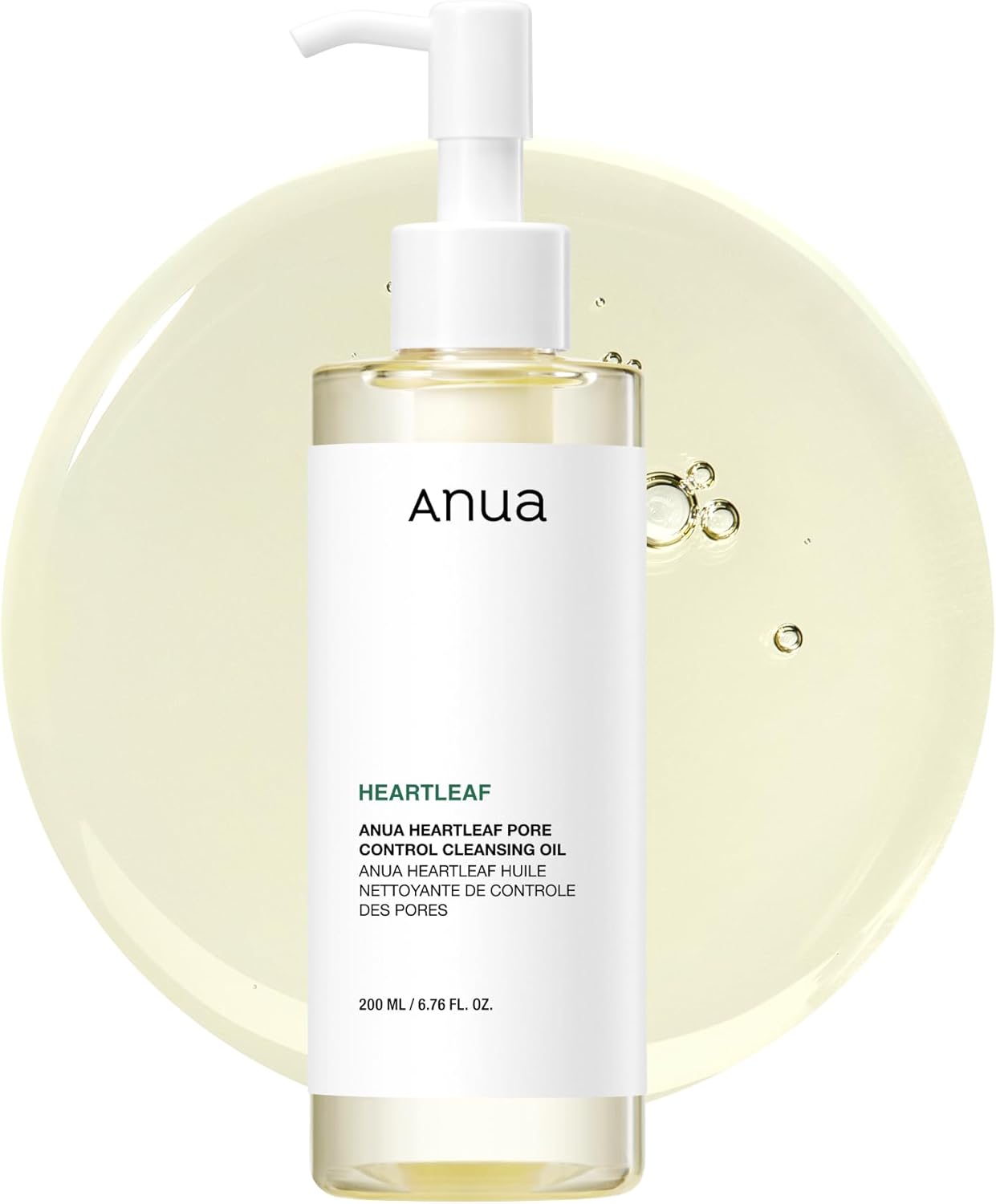
2. Anua Heartleaf Pore Control Cleansing Oil — Best for Double Cleansing
Heartleaf meets oil cleansing for the first step of a double cleansing routine. The emulsifying oil dissolves sunscreen and makeup while heartleaf extract supports calm during the cleanse—useful for acne-prone users who discover heartleaf through the toner. Typically around $15 with roughly 4.4-star ratings on Amazon. Note: this formula lists added fragrance in its INCI (Anua US, 2026); highly fragrance-sensitive users should patch-test on the jawline first.
3. Anua Heartleaf 80 Soothing Ampoule — Best Concentrated Serum Step
At 80% heartleaf (Anua US, 2026), this ampoule delivers a thicker serum step with panthenol and hyaluronic acid for days when skin feels extra reactive. The 1.01 fl oz (30 ml) format suits targeted calming after toner and before moisturizer. Amazon ratings hover near 4.6 stars at roughly $19. Pair it with the 77% toner rather than replacing your entire serum shelf—especially if you already use COSRX snail or other essences from our snail mucin guide.
How to Build a Heartleaf Skincare Routine
Heartleaf products slot into standard K-Beauty layering without overhauling your entire shelf. Follow this numbered routine for most users:
- PM first cleanse: Massage 1–2 pumps of Heartleaf Cleansing Oil onto dry skin for 60 seconds, emulsify with water, then rinse.
- Second cleanse: Use a gentle low-pH gel cleanser (see our double cleansing guide for pairings).
- Toner: Apply Heartleaf 77% Toner with hands or cotton—2–3 layers on irritated days.
- Ampoule (optional): Press 2–3 drops of Heartleaf 80 Ampoule into damp skin when you need extra calming.
- Moisturize + SPF: Seal with a lightweight cream; finish AM routines with SPF 30+. A balanced barrier supports the glass-skin look without stripping.
Pairing with actives: Heartleaf generally layers well with niacinamide and hyaluronic acid. If you use retinol or vitamin C, apply heartleaf toner first, let it absorb 30–60 seconds, then follow with your active—our niacinamide vs vitamin C guide covers similar sequencing logic. Introduce one new heartleaf product at a time for 7–10 days before adding another.
Who Should Buy Heartleaf Skincare—and Who Should Skip It
Buy if you:
- Have sensitive, redness-prone, or combination skin that reacts to harsh acne treatments
- Want a calming toner step under $20 with a high heartleaf concentration
- Are rebuilding your barrier after over-exfoliation and need gentle daily support
- Prefer fragrance-free toners (the 77% toner) for reactive skin
Skip or patch-test first if you:
- Are allergic to plants in the Saururaceae family—rare, but patch-test regardless
- Cannot tolerate any fragrance—the cleansing oil contains added fragrance
- Expect heartleaf to replace prescription acne or eczema treatment—it is cosmetic support, not medicine
- Need only heavy barrier repair with no congestion—centella-led formulas may suit you better
Patch-test on the inner forearm or jawline for 24–48 hours before full-face use.
Heartleaf Skincare FAQ
What is heartleaf in skincare?
Heartleaf is Houttuynia cordata extract—a Korean botanical rich in flavonoids like quercetin and quercitrin. In skincare, it is used to calm redness, support the moisture barrier, and soothe reactive skin. Leading formulas concentrate 77% to 80% heartleaf as the primary ingredient rather than a minor botanical add-on.
Is heartleaf good for acne-prone skin?
Heartleaf is popular for acne-prone, sensitive skin because research documents anti-inflammatory activity and because K-Beauty formulas pair it with oil control and gentle cleansing. It is not a replacement for prescription treatments, but many users prefer it over harsh stripping routines. The Anua cleansing oil suits double cleansing; the 77% toner supports daily calming without alcohol.
Heartleaf vs centella asiatica—which is better?
Neither is universally better. Centella excels at barrier repair and wound-healing pathways through triterpenoids. Heartleaf targets NF-κB inflammatory signaling and congestion-prone, oily-reactive skin more directly. Many routines use centella for recovery and heartleaf for daily calming—they complement rather than duplicate each other.
How do you use Anua Heartleaf 77% Soothing Toner?
After cleansing, pour a small amount into your palms or onto a cotton pad and gently press or pat into face and neck. Use morning and evening. For extra hydration on irritated days, repeat 2–3 layers once the previous layer feels absorbed. Follow with serum, moisturizer, and SPF in the morning.
Can you use heartleaf with retinol or niacinamide?
Yes—heartleaf toners and ampoules generally layer well with niacinamide and retinol. Apply heartleaf toner first, wait 30–60 seconds, then apply your active serum. If you are new to retinol, introduce one product at a time and reduce retinol frequency if stinging persists beyond a few minutes.
What are the best heartleaf K-Beauty products on Amazon?
For U.S. shoppers, Anua's heartleaf line is the most accessible validated set: the 77% Soothing Toner (~$17) for daily calming, the Pore Control Cleansing Oil (~$15) for PM double cleansing, and the 80% Soothing Ampoule (~$19) for concentrated serum-step soothing. All three passed Amazon availability checks in July 2026.
How long until you see results from heartleaf skincare?
Hydration and a calmer feel may appear within the first week of consistent toner use. Visible redness reduction and improved tolerance typically need 2–4 weeks of daily application. Results depend on skin type, concurrent actives, and whether your barrier was recently compromised by over-exfoliation.
Bottom Line: Is Heartleaf Skincare Worth It in 2026?
Heartleaf is more than a TikTok moment—it reflects a real shift toward barrier-first, calming K-Beauty backed by peer-reviewed anti-inflammatory research in skin models and editorial consensus on 2026 routine priorities. Start with Anua Heartleaf 77 Soothing Toner if you want one product under $20; add the cleansing oil for double cleansing and the 80% ampoule when you need a stronger serum step.
Manage expectations: heartleaf supports calm, comfortable skin—it does not guarantee clear skin or replace dermatologist care. Combine with SPF, gentle cleansing, and proven actives like niacinamide for the best long-term results.
Shop our top pick — Anua Heartleaf 77 Soothing Toner on Amazon


